Bodies: As They Are for Tops and Bottoms
Our goal for this first consideration of “bodies in rope” is to address your body in its current state and its readiness for the type of rope interaction you plan to have. We are not talking here about changing your body in some way in order to mitigate risks for specific types of rope interactions and experiences. We will address those concepts later, but it’s important to us that participants understand that your body–as it is right now–can enjoy rope, and that all bodies–as they are–can enjoy rope.
We hope that nobody has or ever tries to make you feel like you can’t enjoy rope because of your age, size, gender, etc., though we know that it’s likely someone has or will.
Bodies and Risk
That said, we also think it’s important to recognize that, although all bodies are able to enjoy rope, the risk of injury from certain types of rope interactions can vary depending on each person’s unique situation. There are a number of factors that contribute to the risk level of any rope interaction: the preparedness of the people involved, their skill level and experience, their ability to communicate effectively, the variabilities of things like hydration, mindset, sleep, environment, luck, etc. But one important factor is the abilities and limitations of the bodies doing the rope. To pretend this is not true is to set yourself up for greater risk.
But what this calls for is a mindful, informed approach to your specific body in rope and the bodies of the people with whom you tie–not a blanket statement about what is or is not possible.
As an example, consider the risk of injury likely to occur to a 60-year-old man dropping into the splits during a dance at a wedding compared to the risk of injury to a 20-year-old woman doing the same thing. The combination of the physiology of how hips work for males vs. females and the different ways in which bodies age make the risk of injury very different for these two individuals. And much more so if the 60-year-old man hasn’t practiced doing splits in 20 years. But a 60-year-old man who practices this activity regularly presents a much different risk profile. Likewise, we need to consider risk in rope both in terms of “general, common” truths about the body and its variances according to physiology, age, conditioning, etc., and in terms of the “specific” practice and preparation of that body in relation to rope.
We also want to note that, while most people likely think of things like weight, age, and flexibility, there are a wide range of things that can affect the risk of any particular body in rope. Some may seem like advantages, but aren’t. Many are not visible to the outside observer. A few examples: hyper-mobility can increase risk, as can a smaller frame with minimal muscle tone; a variety of conditions or diseases cause poor circulation and can therefore increase risk; conditions that make certain joint movements more painful or precarious can increase risk; etc.
Body Variations and Communication
Being able to comfortably talk about your body’s capabilities in honest terms–both with yourself and with those with whom you tie–is one of the best ways you can help mitigate injury. Working together to tie a specific body in rope in ways that maximize enjoyment (based on your intention and goals) and minimizes risk is exactly what we mean when we say “tie your partner, not the rope.”
When thinking about these things, it’s also important to recognize and “come to terms with” the fact that different things feel easy for different people, just as there are things that will feel more difficult for some than for others. Knowing where your current, intended rope interaction lies on that scale for your body will inform the type of immediate preparation you will need for that interaction. And that brings us to the preparation itself.
Preparing the Body You Have for the Rope You Want Right Now
Think of preparation for rope (particularly more intense rope interactions) in two stages: long-term and immediate.
In the long-term, taking care of your body in the weeks and days leading up to a rope interaction is more important than anything you do immediately before that interaction. By this we mean basic care, such as drinking plenty of water, eating well, getting adequate sleep, and getting regular and sufficient movement. (Drinking a lot of water right before the rope starts will likely just result in you needing to pee … probably just as the tie is finished.)
Immediate preparation for a rope interaction is about warming up your muscles with a particular focus on those muscle groups that will be used in the specific interaction you have planned and the form(s) you will be tying/experiencing during that interaction. A general full-body warm-up won’t hurt, but for example: if you don’t do anything to engage your shoulders in your warm-up before an interaction that will involve tying your hands behind your back, you’re missing the benefit of the warm-up.
When we talk about immediate preparation through warm-ups, we mean gentle movements that engage and activate the muscles in order to increase blood flow to those areas … we do not mean passive stretching. Rope is already a form of assisted passive stretching. Therefore, over-stretching an area without first engaging those muscles to protect the body can lead to over-extension and injury.
Exercises to Consider
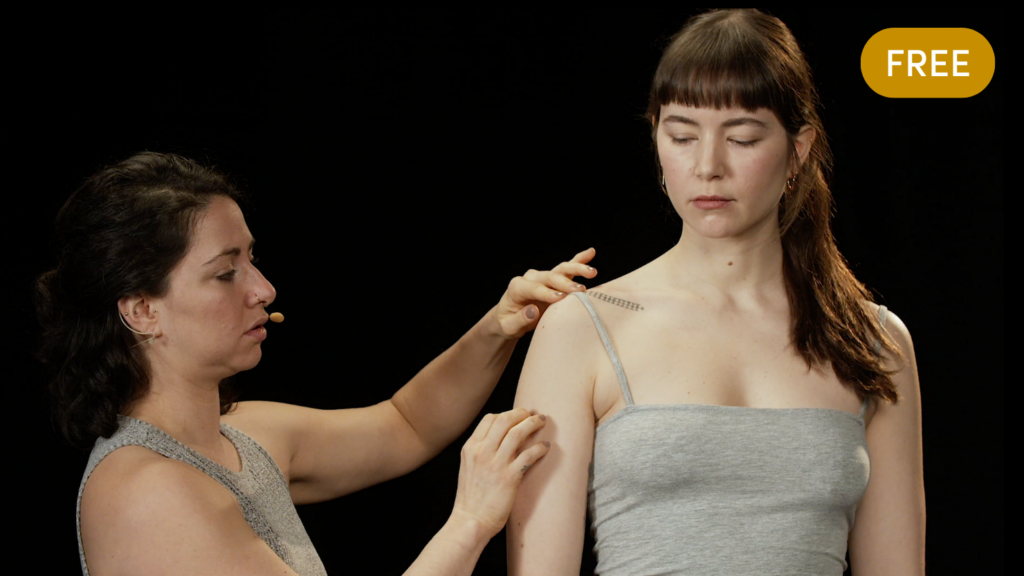
We are very grateful that this series of exercises from fuoco is available for free on ShibariStudy.com. Fuoco is a professional acrobat with a passion for studying body mechanics and sharing her insights in relation to rope. We highly recommend you watch the series of videos in the “Body Awareness 101,” “Gentle Flexibility,” and “Fitness for Hyper Mobility” sections of the site and begin incorporating the exercises that make sense for your body and your goals. They are better and more informed than anything we could provide here.
Beyond Preparation
Oftentimes the things we enjoy doing for kink are rough on our bodies, so being kind to them in other ways is how we ensure that we can continue to do kink for a long time.
Immediately after a rope interaction, some people do find it helpful to do gentle stretching, either on their own or assisted, mainly with the goal of relieving tension in the areas of the body that were tightly bound and/or in a stressful position.
And getting some water and/or light sugars immediately after rope can help the body recover, as well. After intense interactions, we recommend following up with some carbs or proteins after 15 minutes or so to help the body regulate itself after the intense changes in temperature, hormones, and blood sugar levels that typically occur. (Some also prefer warm baths when they’re back at home!)
Long-term follow-up care is the same as long-term preparation: giving your body what it needs to feel its best.
As we mentioned in the beginning, it’s completely understandable if you have a goal of changing your body’s capabilities in order to enjoy a particular type of rope interaction (or reduce the risk associated with it). This typically involves activities that built strength, flexibility, and/or endurance. We just want to remind you that this is a separate goal from the one we are addressing here: preparing the body you have for the rope you plan to experience right now.